

Welcome to the fascinating world of ceramics, where creativity meets craftsmanship. Whether you are taking your first steps in pottery or looking to refine your skills, understanding basic ceramics techniques is crucial. This guide will offer some basic insights into pottery and provide resources to elevate your ceramics education.
Understanding the Basics
Beginning your journey in ceramics requires an understanding of the fundamental techniques. Let's explore these essential practices that every novice potter should know:
1. Hand Building
Hand building is a perfect starting point for beginners. This technique involves shaping clay with your hands, often using simple tools. Learning this method will provide a solid foundation in understanding the behavior of clay!
If you're just starting out with hand building, you could try creating:
|
Pinch pots: Form a vessel from a ball of clay by pinching and rotating it with your thumb and fingers to thin the walls, creating simple bowls, cups, or decorative forms.
|
Coil Pots: Ceramic vessels built by rolling clay into coils, stacking them, bonding them with slip or scoring, and shaping the form, with options to leave coils visible for texture or blend them smooth for seamless walls.
|
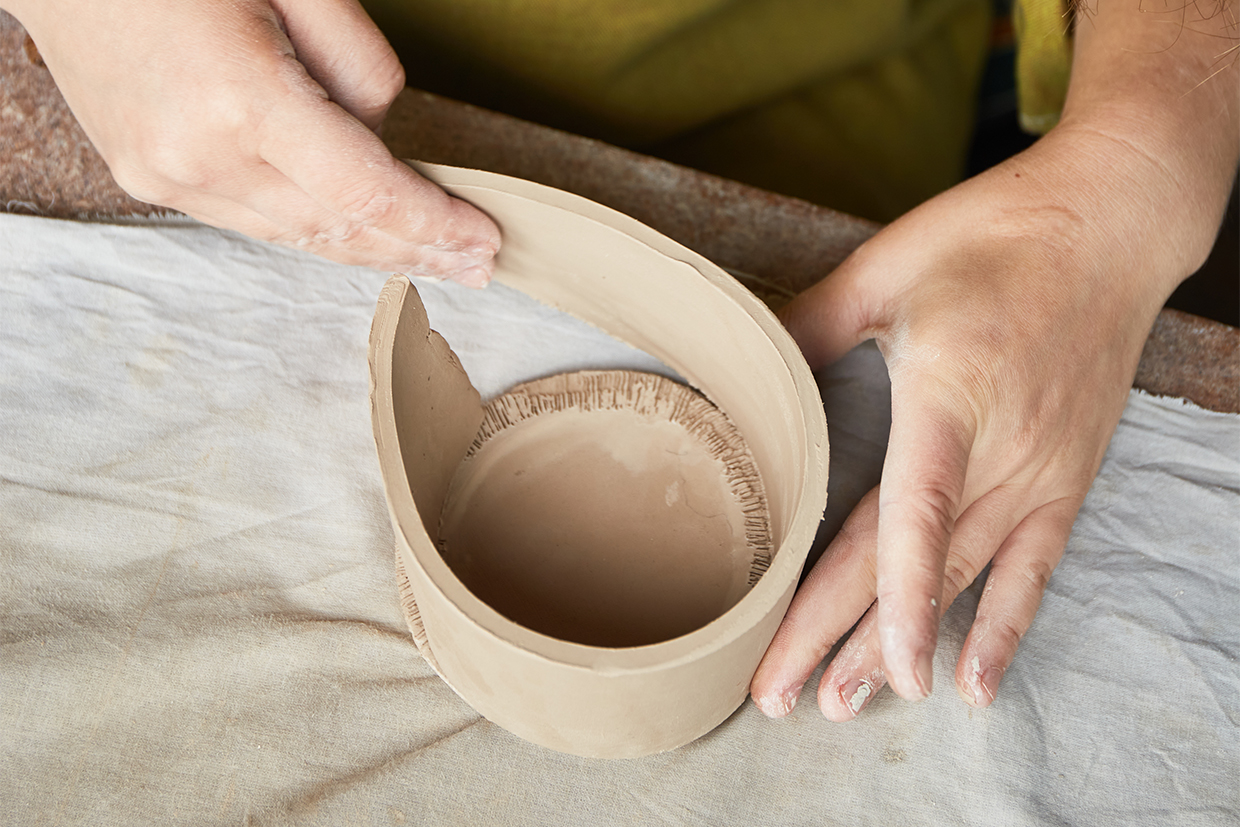
Slab Projects: Roll clay flat and drape it over a mold (like a bowl or upside-down plate) to create dishes, or cut shapes for coasters and tiles.
|


2. Wheel Throwing

Wheel throwing is a skill that many associate with traditional pottery. This technique uses a potter's wheel to form symmetrical and functional items. It's a more advanced skill but incredibly rewarding once mastered. For those eager to dive into wheel throwing, consider accessing our FREE Wheel Throwers Startup Guide and FREE Beginner Wheel Throwing Checklist to get started on the right track.
3. Slip Casting

Slip casting involves pouring liquid clay, known as slip, into plaster molds to create consistent and complex shapes. It's an excellent technique for replicating intricate designs multiple times. If you're interested in exploring this method, download the FREE Pottery Slip Casting Table Plans to set up your workspace efficiently.
Essential Supplies
Gathering the right materials is crucial when starting in ceramics.
Make sure you have:
- Quality clay
- Basic sculpting tools
- A potter's wheel if you're venturing into wheel throwing
- Access to a kiln for firing your creations (While a kiln is essential for firing, many beginners start by using firing services at local community centers or pottery studios before purchasing their own)
Furthering Your Education

Engaging with comprehensive courses and memberships can significantly enhance your pottery skills. Consider exploring our Courses & Workshops for more learning options!
For a more tailored experience, the Mathom House Virtual Membership offers access to all of our courses and Workshops and insights from experienced potters. It's a fantastic way to stay inspired and informed.
Embarking on your ceramics journey is both exciting and enriching. By mastering these foundational techniques and utilizing the available resources, you are well on your way to becoming an accomplished potter. Always remember that patience and practice are your best tools for growth in this artistic field.
For more information and resources, visit Mathom House Studios.
Happy Making!